30 June 2010 - angela.reggi
Italian primary school implements ISO 14001
Although ISO 14001:2004 is a generic standard for implementing an environmental management system (EMS) in any type of organization, certain applications are nevertheless rare. This the case of schools, even though the indirect environmental aspects of education may have at least the same importance, if not more, than direct ones such as energy consumption and waste production.
Environmental education has the potential to change students’ actual behaviour and to form future citizens who will face environmental issues in a very different way.
Over the last few years, some high schools in Italy decided to apply ISO 14001 and the European Eco-Management and Audit Scheme (EMAS) but, up to now, there have been no cases of implementation in primary schools, where the pupils are from 6 to 11 years old.
For this reason, the decision of a local authority, Provincia di Vicenza, to promote the adoption of an EMS in the Vittorino Da Feltre primary school was selected as a case study in a master thesis of environmental sciences at the Ca’ Foscari University, in Venice.
The Da Feltre primary school is located in Vicenza, a small city in the north-eastern part of Italy, about 60 km far from Venice. The school has a “population” of one director, 25 teachers, 6 janitors, 7 administrative assistants and 155 pupils.
One of the principal difficulties in applying an EMS in this situation is due to the need to maintain a system of fixed rules, while there is a continual turnover of the main school population – the pupils. In fact, every year it is necessary to update requirements in line with their increasing age. At the same time, the pupils’ youth and keenness make it extremely motivating to work on the environmental education of future generations.
Multidisciplinarity
Environmental education can be carried out with a multi-disciplinary approach. It is, in fact, possible to teach environmental issues using theatre or music as tools, or through the study of a foreign language, or using direct experience and experiments – or even simply playing.
In this way, students come to understand in depth the multiple relations existing between the environment and every aspect of life. Studying and living the environmental topics at school increases their awareness about these issues and about concepts as raw materials, energy consumption, pollution, land use, re-use and recycling.
For example, once the Da Feltre ISO 14001 project was launched, the very youngest pupils began learning songs about nature and the relation of humankind to it. Mathematics and science teachers began to apply their theoretical rules to monitor water and energy consumption, or the transportation used to bring the children to school – information which also has been useful for the preparation of the environmental initial review.
External lectures have been given by local authorities to explain the refuse collection and disposal systems applied in Vicenza. What students have learned has then been put into practice in their classes and in the canteen. External visits have been organized to a landfill and to a site for recovering and recycling waste in order to complete the overview of waste management.
Encouraging the pupils to get involved has been one of the main aims of the project. For example, the project logo is the result of their participation. All pupils were asked to design their own logo proposal, according to their personal feelings toward the beauty of the environment and the problems the environment itself is experiencing.
The potential of EMS implementation in a primary school is not limited to the children – in fact, it can be extended to their families. Involving the pupils in many activities, making them feel a part of the complex system that is the environment, can result in strong emotional dynamic shared by the children with their families.
It became common to hear stories of competition between children and fathers about who uses less water to brush their teeth, or of pupils committed to teaching their mothers how to sort different types of rubbish.
The final objective of the project consists in broad promotion of this experience on a larger scale, communicating the model that has been created. For this reason, all the documentation will be available free of charge for every school interested in carrying out a similar project.
An agreement between two local authorities – Provincia and Comune of Vicenza – has created an opportunity to focalise potential investments for a renewal of school infrastructure with reduced environmental impacts.
The Kids’ ISO 14000 Programme
The involvement of families is one of the main objectives of EMS applied to schools. In order to achieve this aim schools can now use a new tool supported by ISO: “The Kids ISO 14000 Programme”, invented by Professor Takaya Kawabe and by Ms. Miyuki Koyama, respectively the President and the Secretary General of the Japanese non-governmental and non-profit organization, ArTech.
This programme teaches children how to put into practice the Deming cycle – Plan-Do-Check-Act – in their homes, together with their families. Children, according to this programme, have to fix objectives such as reducing water or energy consumption and increasing the sorting of household waste. Then they have to fix reachable, specific and time-related targets, and then monitor implementation levels of the actions taken to reach those targets.
Throughout the process, children are helped by their families and “checked” at school by a sort of auditor. The programme tries to motivate children by giving them the possibility of organizing competitions, with a reward for the most “environmentally virtuous” child in the school.
The final and positive conclusion of the Provincia of Vicenza’s pilot project does not mean that the Da Feltre school will be able to achieve ISO 14001 certification. To reach such an objective it would be required a full-time involvement by teachers.
However, it can be said that an EMS represents a tool that can bring opportunities and benefits to schools where pupils, the major part of the population, can feel highly involved. At the same time, as in any type of organization, a successful result can only be achieved through a complete commitment and involvement of the entire school – pupils, teachers, support and administrative staff.
12 December 2022
A new face for Carbon Footprint Italy

10 November 2022
Aequilibria at the COP27 in Sharm el-Sheikh
12 October 2022
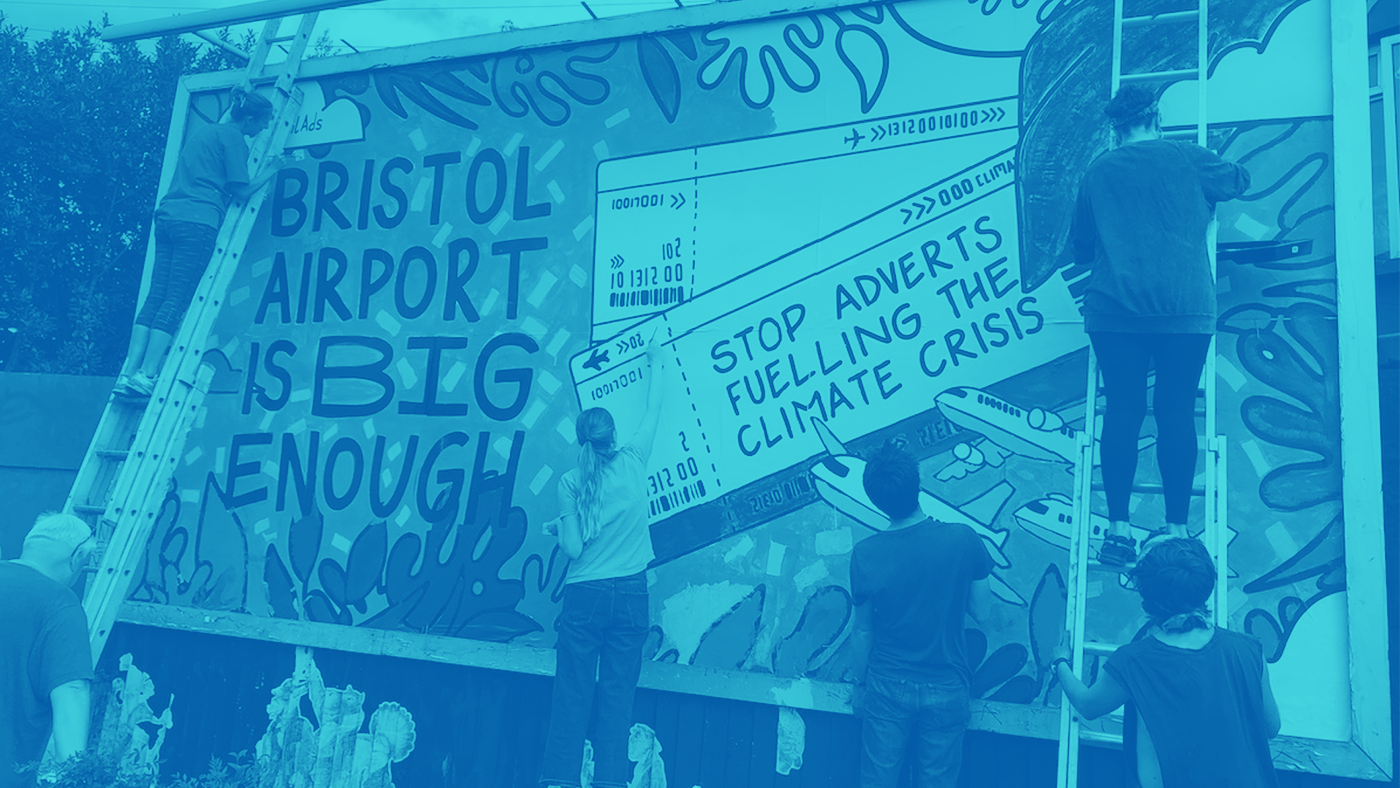
Greenwashing: the other side of sustainability
6 October 2022
Big news in the Carbon Footprint International Alliance!

19 July 2022
The second edition of Close the Tap is ONLINE!
16 June 2022
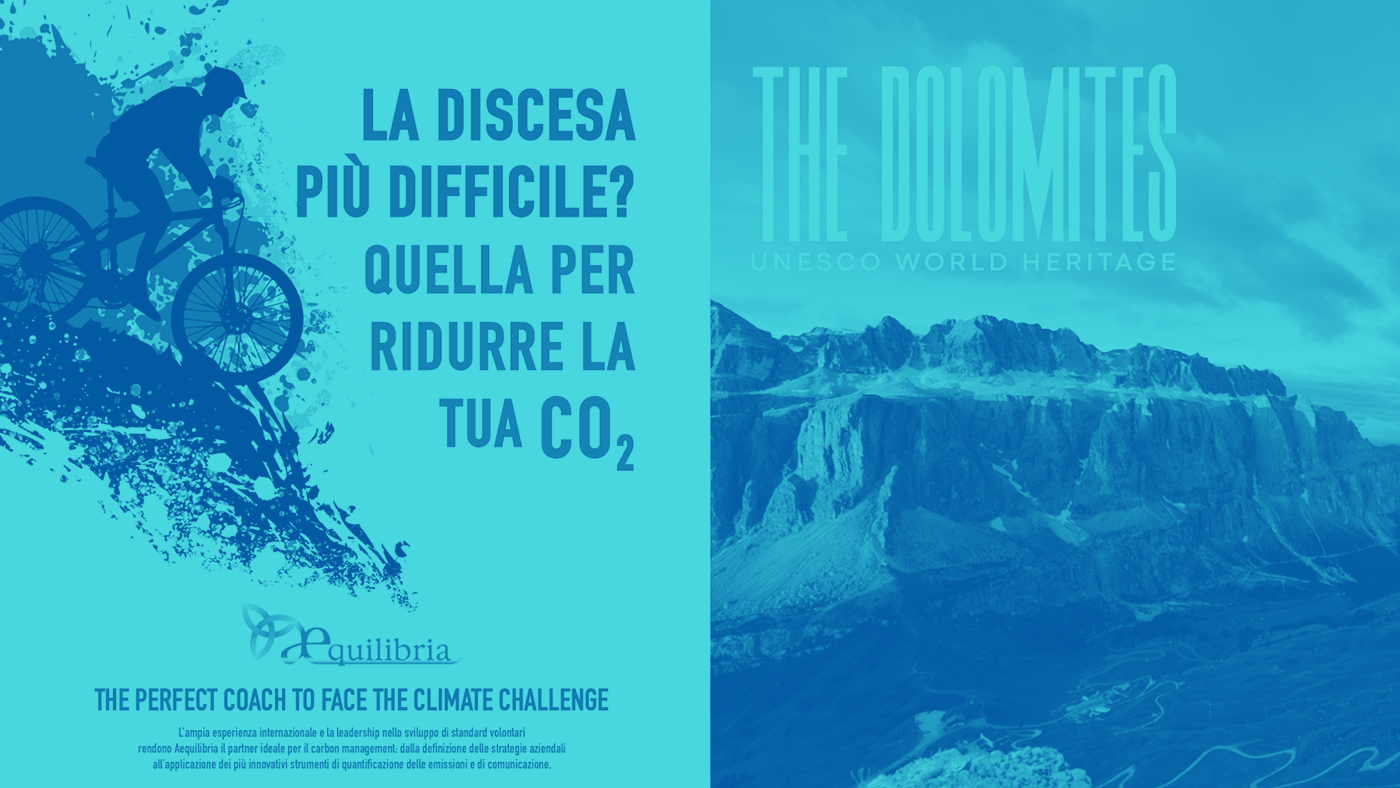
Aequilibria is Sustainability Partner of HERO Dolomites!
19 April 2022
The video contest “CLOSE THE TAP” has come to an end: here are the winners
31 March 2022
Arctic and Antarctica never so hot: what is going on?
22 March 2022
The Council of the European Union approves the CBAM, the new Carbon Border Adjustment Mechanism
7 December 2021
The video contest on climate change “Close the tap” is now on FilmFreeway platform
15 November 2021
Good morning from Glasgow: Daniele Pernigotti at the COP26 – The Good COP and the Bad COP for the Glasgow Climate Pact
12 November 2021
Good morning from Glasgow: Daniele Pernigotti at the COP26 – The last mile
11 November 2021
Good morning from Glasgow: Daniele Pernigotti at the COP26 – The COP failed! Or not, there is a deal! The immaturity of (some) Italian press

10 November 2021
Good morning from Glasgow: Daniele Pernigotti at the COP26 – The famous Article 6

9 November 2021
Good morning from Glasgow: Daniele Pernigotti at the COP26 – For those thirty pieces of silver…
8 November 2021
Good morning from Glasgow: Daniele Pernigotti at the COP26 – Success, failure, or the usual half-full glass?
5 November 2021
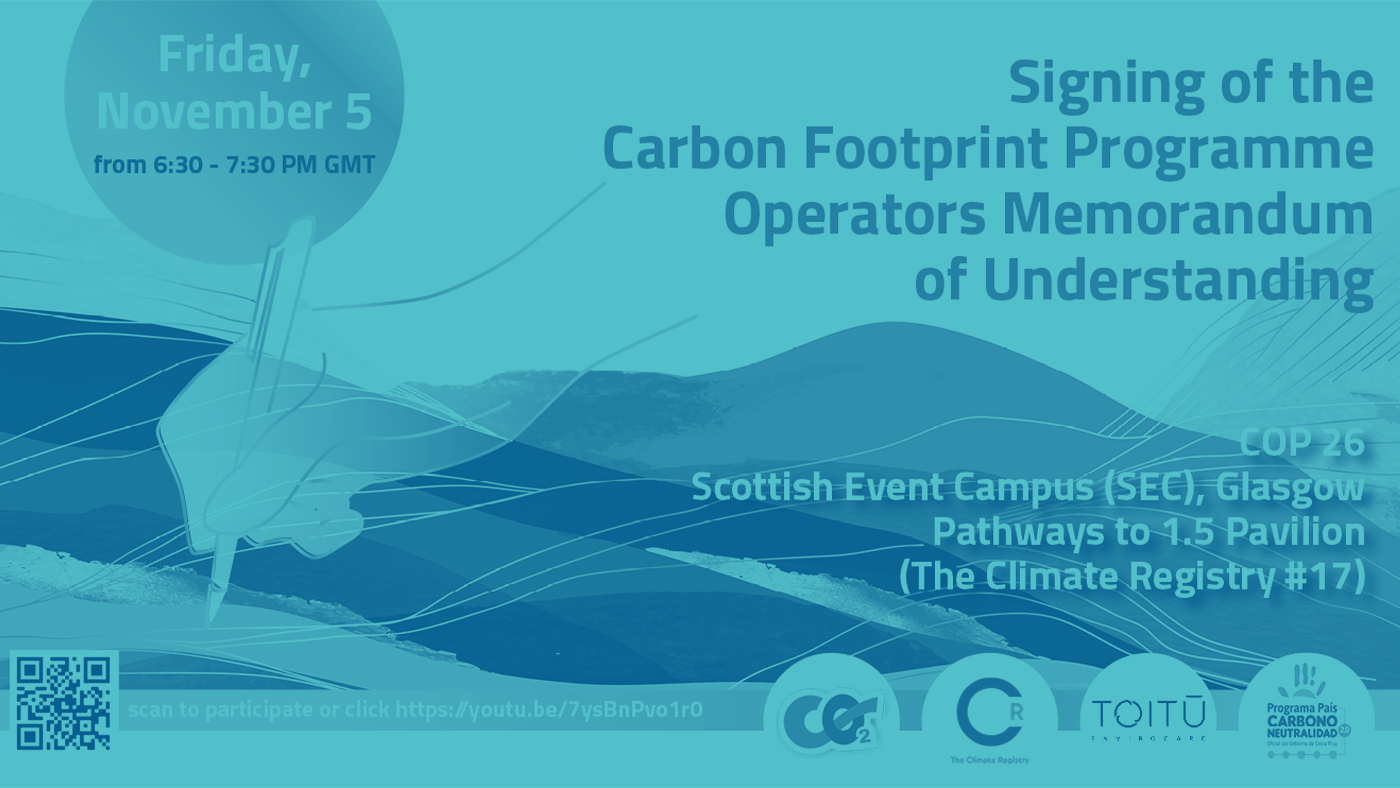
Good morning from Glasgow: Daniele Pernigotti at the COP26 – The first step towards a global Carbon Footprint label
4 November 2021
Good morning from Glasgow: Daniele Pernigotti at the COP26 – Adaptation: the other side of the coin
3 November 2021
Good morning from Glasgow: Daniele Pernigotti at the COP26 – Participation or anti-COVID19 measures…That is the question.
2 November 2021
Good morning from Glasgow: Daniele Pernigotti at the COP26 – The UN Secretary General never so harsh: Stop treating Nature like a toilet!