10 Aprile 2015 - angela.reggi
Un mondo bulimico e ipertrofico

13 foto che descrivono in modo sorprendente il livello di sovrappopolazione della terra e l’eccesso dei consumi del nostro stile di vita. Esattamente la direzione opposta di uno sviluppo sostenibile!
-
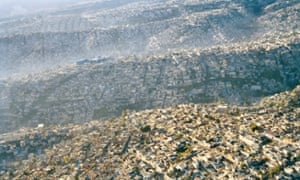
Waves of humanity
Sprawling Mexico City rolls across the landscape, displacing every scrap of natural habitat
‘If our species had started with just two people at the time of the earliest agricultural practices some 10,000 years ago, and increased by one percent per year, today humanity would be a solid ball of flesh many thousand light years in diameter, and expanding with a radial velocity that, neglecting relativity, would be many times faster than the speed of light.’Gabor Zovanyi
Photograph: Pablo Lopez Luz
-
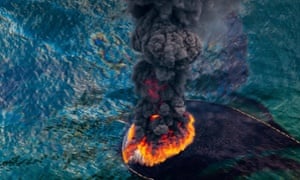
Oil spill fire
Aerial view of an oil fire following the 2010 Deepwater Horizon oil disaster in the Gulf of Mexico
‘We must realise that not only does every area have a limited carrying capacity, but also that this carrying capacity is shrinking and the demand growing. Until this understanding becomes an intrinsic part of our thinking and wields a powerful influence on our formation of national and international policies we are scarcely likely to see in what direction our destiny lies.’ William Vogt
Photograph: Daniel Beltra/Greenpeace
-
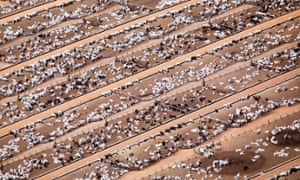
Feedlot
Industrial livestock production in Brazil
‘Despite the industry’s spin, concentrated animal feeding operations are not the only way to raise livestock and poultry. Thousands of farmers and ranchers integrate crop production, pastures, or forages with livestock and poultry to balance nutrients within their operations and minimise off-farm pollution through conservation practices and land management. Yet these sustainable producers, who must compete with factory farms for market share, receive comparatively little or no public funding for their sound management practices.’Martha Noble
Photograph: Daniel Beltra/Greenpeace
-
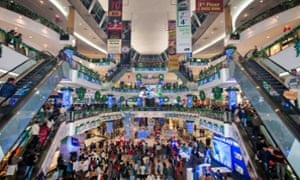
South City Mall in Kolkata, India
Consumer culture spreads to the global south
‘In the developing world, the problem of population is seen less as a matter of human numbers than of western over-consumption. Yet within the development community, the only solution to the problems of the developing world is to export the same unsustainable economic model fuelling the overconsumption of the West.’ Kavita Ramdas
Photograph: Brett Cole
Photograph: Brett Cole
-
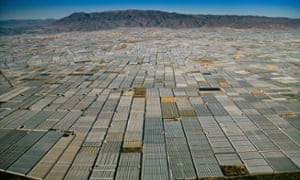
Greenhouses grow greenhouses
As far as the eye can see, greenhouses cover the landscape in Almeria, Spain
‘We are slaves in the sense that we depend for our daily survival upon an expand-or-expire agro-industrial empire – a crackpot machine – that the specialists cannot comprehend and the managers cannot manage. Which is, furthermore, devouring world resources at an exponential rate.’ Edward Abbey
Photograph: Yann Arthus Bertrand
-
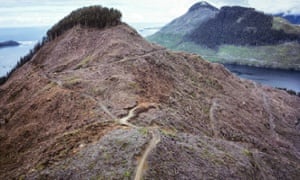
British Columbia clear-cut
Sometimes called the Brazil of the North, Canada has not been kind to its native forests as seen by clear-cut logging on Vancouver Island
‘Human domination over nature is quite simply an illusion, a passing dream by a naive species. It is an illusion that has cost us much, ensnared us in our own designs, given us a few boasts to make about our courage and genius, but all the same it is an illusion.’ Donald Worster
Photograph: Garth Lentz
-
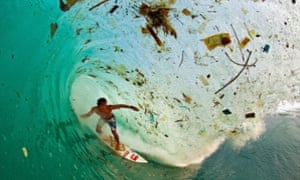
Trash wave
Indonesian surfer Dede Surinaya catches a wave in a remote but garbage-covered bay on Java, Indonesia, the world’s most populated island
‘Water and air, the two essential fluids on which all life depends, have become global garbage cans.’Jacques-Yves Cousteau
Photograph: Zak Noyle
-
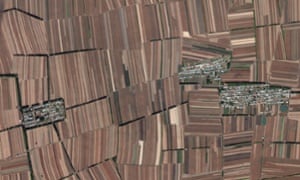
Rectangular fields
No room for nature, the entire landscape is devoted to crop production in China
‘Globalisation, which attempts to amalgamate every local, regional, and national economy into a single world system, requires homogenising locally adapted forms of agriculture, replacing them with an industrial system – centrally managed, pesticide-intensive, one-crop production for export – designed to deliver a narrow range of transportable foods to the world market.’ Helena Norberg-Hodge
Photograph: Google Earth/2014 Digital Globe
-
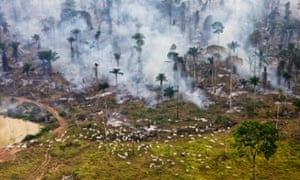
Cows and smoke
Ground zero in the war on nature – cattle graze among the burning Amazon jungle in Brazil
‘Throughout history human exploitation of the earth has produced this progression: colonise-destroy-move on.’ Garrett Hardin
Photograph: Daniel Beltra/Greenpeace
-
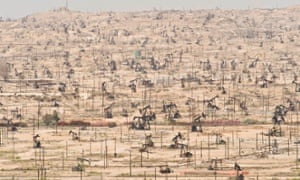
Oil wells
Depleting oil fields are yet another symptom of ecological overshoot as seen at the Kern River Oil Field in California
‘I don’t understand why when we destroy something created by man we call it vandalism, but when we destroy something created by nature we call it progress.’ Ed Begley, Jr.
Photograph: Mark Gamba/Corbis
-
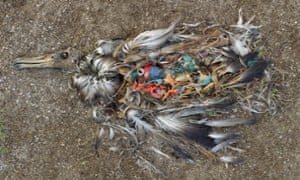
Dead bird
On Midway Atoll, far from the centres of world commerce, an albatross, dead from ingesting too much plastic, decays on the beach – it is a common sight on the remote island
‘Surely the fate of human beings is like that of the animals – the same fate awaits them both; as one dies, so dies the other. All have the same breath.’ Ecclesiastes 3:19
Photograph: Chris Jordan
-
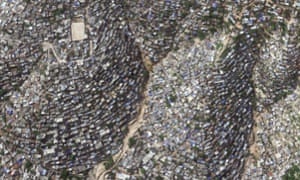
Hill-side slum:
Slum-dwelling residents of Port-au-Prince, Haiti, face bleak living conditions in the western hemisphere’s poorest country
‘Squatters trade physical safety and public health for a few square meters of land and some security against eviction. They are the pioneer settlers of swamps, floodplains, volcano slopes, unstable hillsides, rubbish mountains, chemical dumps, railroad sidings, and desert fringes … such sites are poverty’s niche in the ecology of the city, and very poor people have little choice but to live with disaster.’ Mike Davis
Photograph: Google Earth/2014 Digital Globe
-
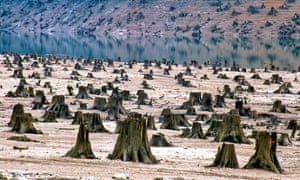
Reservoir development
Former old-growth forest leveled for reservoir development, Willamette National Forest, Oregon
‘What an irony it is that these living beings whose shade we sit in, whose fruit we eat, whose limbs we climb, whose roots we water, to whom most of us rarely give a second thought, are so poorly understood. We need to come, as soon as possible, to a profound understanding and appreciation for trees and forests and the vital role they play, for they are among our best allies in the uncertain future that is unfolding.’ Jim Robbins
Photograph: Daniel Dancer
Clicca qui per leggere l’articolo originale
9 Settembre 2026
Come la Turchia bilancia decarbonizzazione e sicurezza energetica?

7 Settembre 2026
Carbon Footprint di Prodotto e ISO 14067: impara a quantificare e comunicare l’impronta climatica
2 Settembre 2026
Impact Report 2025: raccontiamo l’impatto di Aequilibria

31 Agosto 2026
Analizzare il rischio greenwashing nella comunicazione ambientale

27 Agosto 2026
ETS 2: scopri requisiti di compliance e impatti sulle strategie aziendali
20 Agosto 2026
Mobilità elettrica e Linee Guida UNECE per l’efficienza sistemica

18 Agosto 2026
Impatti sulla salute del cambiamento climatico: 24 settembre torna “Dialoghi sul Clima”
20 Luglio 2026
Come la Cina sta definendo il quadro di normazione “Dual Carbon”?

16 Luglio 2026
Come decarbonizzare la filiera della moda? Il caso Paris Good Fashion al 107° Tea Corner

1 Luglio 2026
Verso città libere dalla pubblicità fossile: il ruolo dei Comuni e degli standard tecnici.

4 Giugno 2026
Verifica e Validazione delle Emissioni GHG: fondamenti normativi e accreditamento
18 Maggio 2026
Corso Carbon Neutrality: come raggiungerla secondo la ISO 14068

6 Maggio 2026
ETS 2: la nuova scadenza per la Dichiarazione di Verifica è il 30 giugno 2026
30 Aprile 2026
EU ETS e carbon leakage: la tesi vincitrice dell’ultimo bando Tesi per il clima

28 Aprile 2026
Misurare e comunicare l’impatto sociale: perché è importante?

27 Aprile 2026
Santa Marta: la prima Conferenza internazionale sull’abbandono dei combustibili fossili

21 Aprile 2026
Corso CBAM & ETS: dalle regole alla readiness (III edizione)
15 Aprile 2026
ETS nel mondo: la nuova frontiera del carbon pricing globale al 104° Tea Corner

26 Marzo 2026
Corso self-paced sulla Carbon Footprint of Products: come applicare la ISO 14067?
17 Marzo 2026
Corso CBAM: dalle regole alla readiness per la fase definitiva | Mercoledì 1° aprile